• those autumn vibes

    those autumn vibes

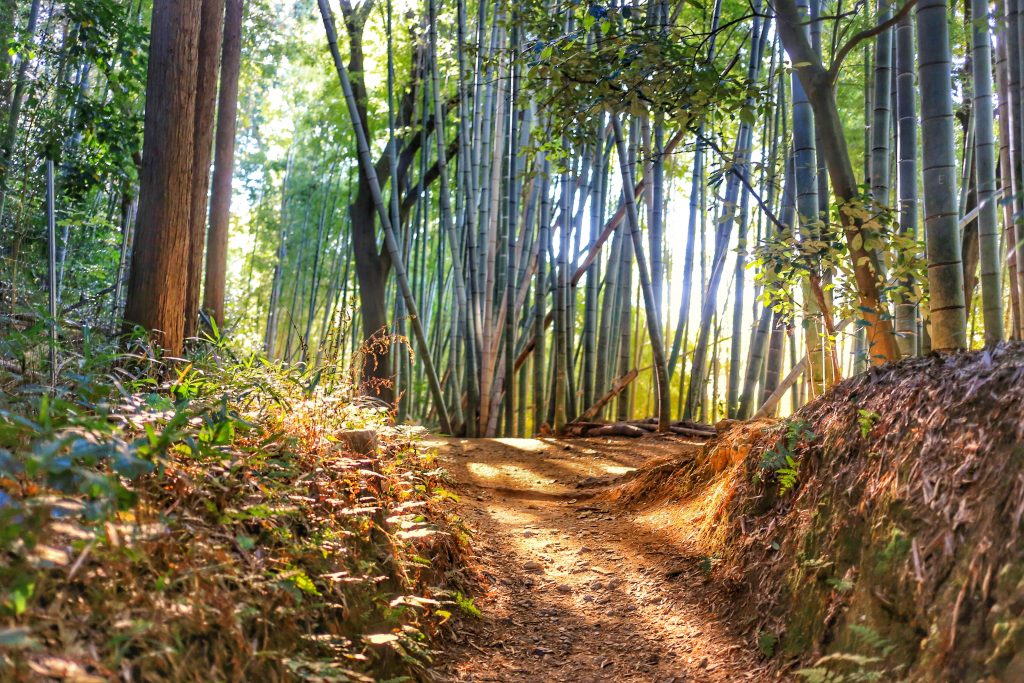
    There is a pale soft mist floating upon the grass this chilly October morning.

    I realize that is has been nearly a year since I wrote here, and in the meantime I have complicated our little relationship—a transaction that should be simpler—by adding and twisting and doing things that were never going to work without a full on manifestation of effort towards turning this thing into a full time career.  Also, I am cheap (nay, thrifty) so I have reduced my digital footprint into a subdomain where I can properly secure the invisible-to-you code that helps create this website.  Yet, I won’t bore you with the complexities of it all here. Not today. Not in a vague sort of explanation post.

    There is a mist on the grass that is indicative of a change in the weather, the temperatures trying to fall into winter temps while the summer sighs its failing gasps and in the middle of it all, a pale drift of mist sits atop the green grass which itself is flecked with orange and brown leaves.

    Back when I started writing this blog it was a hobby project meant to reflect a certain sensibility—the kind of sensibility that notices the clash of ethereal nature with the drumbeat of technology. Cast iron cooking became a bit of a symbol of that in my mind.

    Those were some ambitious years.

    In the meantime a dozen other “guys” have done cast iron much better than I ever could have, spending money and time on tools and collections and techniques and ideas that turn me, relatively speaking, into a mere rambling philosopher of something less cast into iron and more cast into words, something that I can’t quite pin down.

    And a lot has changed during that time, too. I was a guy who did technology professionally and food for fun, and now—somehow—I am a guy who does food professionally and technology for fun. My newest, latest gig immerses me in exotic ingredients, asks of me that I learn the nuances of the smoke points of oil blends, the protein content of breads and pastas, or the result of fat on the flavour absorption of soft cheeses. I am turning into something of a roving expert on these things, helping people eat and enjoy and cook and be healthier.  It is amazing.

    And somehow I have been sitting here on a blog archive that is almost perfectly lined up to support that—at least support my introspection and deeper personal learning about that.

    I won’t bore you with the boring technology bits about domain name security certificates and 301 redirects and complexity of securing a blog, even a little one like this, against hackers but I will tell you that like the mist on the autumn grass all of that is kind of a symbol of seasonal change and that something different is afoot on this site.

    I can’t say I’ll write daily, but I will write more.

    About food. About cooking. About the outdoors and healthy living and running races through the trails. About a cast iron kinda life that doesn’t necessarily always mean a cast iron frying pan—but then sometimes it just might.  Stay tuned.

  • from high altitude.

    from high altitude.

    Anyone in search of an example of modern evolutionary pressure look no further than the common fly. 

    Back in the city, like up high in the mountains, flies are ubiquitous.

    But unlike the mountains, the cities are filled streets, buildings, parks and coffee shops full of people. City flies need to be smart and fast.  Any fly that is not keenly aware of its surroundings and has not the instinctual inclination to leap into the air and off into the safety of flight is doomed to be swatted by any of a million people. Flies are not be dullards, and any fly born without the inbuilt drive to flee is unlikely to survive long enough to pass on its disadvantageous genome to a future generation.

    We have spent nearly three days up high in the backcountry camping in the mountains where a million variety of insects thrive. In fact even high up above the tree line where even in mid-August patches of snow remain in the share of large rocks, there are so many flies that an adventure-seeker is bound to spend as much time swatting away bugs as admiring the views. And it struck me as curious—though probably less so for the fly which I smacked dead upon my bare forearm—that there must be significantly less pressure, evolutionarily speaking of course, for mountaintop flies to carry a genome that knows better than to get smacked by a human—which a fly may rarely, if ever, see in is short life on the side of a mountain—than for one of its city cousins who encounter humans as a matter of course and have no such luxury as to leisurely investigate a bare forearm on a Friday afternoon.

    inhospitable conditons

    There were insects of all variety everywhere, swarming and buzzing in my ears, tickling my nose and even swooping with indifference into my mouth (which admittedly I didn’t realize was so regularly slack jawed) but even that wasn’t the biggest barrier to success atop a mountain. I had brought along a minimal watercolour set: every gram of weight mattered when you need to lug everything required to survive for three days in the backcountry up a literal cliff face. Seven pans squeezed into an altoids tin, a self-watering brush, a single black pen, and a thin watercolour notebook, all of it sealed into a zipper bag. Three of my hiking companions were lingering nearby as I tried to capture *something*  and there was not a moment to spare in this absolute paradise atop a mountain. Amazing views. Unbeatable scenery. Not an art studio.  I often art under non-ideal conditions, but occasionally I art at the borders of impossible. But apparently it was not. 

    Nearly every fly I encountered up on that mountain was indifferent to the risk of sudden death carried by my swiftly moving hand.

    Nearly every fly sat patiently and still as I reached over and snuffed it away.

    Smacking a city fly requires speed and agility on the part of a human, but one feels superhuman atop a mountain as the dull flies understand too little what awaits the looming shape and shadow of a hand moving towards them.

    Evolution at work.

  • in a theme park.

    in a theme park.

    As it turns out, Disneyland is not a great place to sketch.

    Oh, sure, it might be a great inspiration for sketching. There are a few thousands of people worth sketching. There is colour and shape and light and shadow and trees and architecture and—deep breath.

    There are also about fifteen places to sit, total. You never really stop moving, and if you do it’s usually because the ride queue is jammed up, and all the best sight lines are meant to be snapped with a camera and moved out of the way for the next person.

    Sketching in Disney kinda sucks.

    But also, it was a bit of a challenge.

    In 2022 we went to Florida and checked out Disney World and I had it in my mind to do some sketching there. When we arrived I started carrying my sketchbook around but then between my unwillingness to be fast and loose and messy, I couldn’t afford (nor would my family tolerate) camping on a bench for thirty minutes to carefully draw a building or a ride or something. So, I started snapping reference photos and (being that we spent a lot of down time at the hotel) I did lots of painting in the evenings from my phone screen.

    loosy goosy

    where photography is about pixel-perfect capturing a scene, and yes, watercolour can be that too when the mood strikes, there is a dream-like element to the flow of water and pigment that can be embraced if one is willing to step away from the seeking of realism. I have been trying to relax my brain in this regard for years, always in a little lockstep with the photographic mindset. “how will people know what I’m painting if the colours/shapes/outlines don’t match??!!” I am trying now to embrace my loosy goosy period, that effort to evoke a vibe or a mood or a feeling from a painting while leaving the literal behind. A bit of shape. A lot of squiggles. A lot of water. A dab of this and a dob of that and just let physics take over. It takes some chill, but it can work out.

    In 2024, just a week ago as I write this, we went to California to check out Disneyland, and I decided, fresh small-format sketchbook in hand and some ripe thoughts about style, that I would experiment. Fast sketches were on the agenda. No sitting. No parking or camping somewhere to draw. Pull out the book and pen and with a maximum (literally MAX) of five minutes, get as much sense of a scene as I could onto paper and—

    Well, I snapped a pic, too, and did all my painting back at the hotel. I wasn’t exactly going to hold a sketchbook open on a rollercoaster while I waited for my washes to dry.

    I did the math and for about 28 sketches I clocked in about six hours total over the week, sketching & painting, and filled front to back an entire Moleskine “small” 3.5×5.5 watercolor folio. Every page, usually double wide.

    The paintings are messy. Some of them I was a little loose on the detail. Some I was a little heavy on the colours. A few got some leakage through the seams of the paper.

    Had I spent even an hour on each of those pics to, you know, make them neater or give them more detail then I would have spent twenty eight hours—two whole waking days—painting everything I painted. As it is, I got it all in between rides and during some hotel siestas. Isn’t that the best way to art, huh?

  • about all the little details.

    about all the little details.

    As Ferris Beuller wisely reminded us, life moves pretty fast. If you don’t stop and look around once in a while, you could miss it.

    I spend a lot of time rushing. And this shortcoming often applies to my painting, as well.

    Of course, one of the so-called rules of watercolour painting that I picked up on early on in my artistic efforts was that in watercolour timing is gosh darn nearly everything. Almost every technique and method somehow relates to the timing of the application of the paint mixture onto the surface during a window of time while there is a certain moisture level on the paper or a particular dryness of the last application or at a very specific moment of diffusion of pigments. Timing can change the final look of a piece dramatically. Vibrancy comes from precision.

    Another of course, because of course, I mistook timing for speed.

    That is to say, I have had this knot in my brain as I reach for my brush to put paint onto the page that precision timing was all about being fast and efficient. I got tangled up in the notion that one wet the page and then zip-zap-zooey one flung the paint around in a glorious way, without hesitation, to create the perfect piece of art. I foolishly thought it was about racing the evaporation of the water.

    And sometimes it is.

    But usually it is not.

    I have learned, slowly, that in fact is goes a lot more like this: some artists are not so much good because they are fast, some artists are fast because they are good.

    short backwards strokes

    Last fall I realized that there was a certain beauty to be found in boundless intracacy. In the details. I dug into the art of sketching backwards from where I usually started. Usually, I would draw the shape of the whole then work inwards to elaborate on the details. A building would materialize as a box on the horizon and then the doors, windows, eaves, ledges, bricks and more would fill in the inside as if I was colouring inside the lines. A tree would begin as a silhouette and then I would scribble in the leaves and the branches and the shadows and all the internal shapes to make it more tree-like.  But taking that backwards, a building might start as  a valance light fixture on a brick wall that extended outward to fill outwards. A tree might start as a collection of inner branch-like shapes with some details leaves and shadows and then maybe only imply that the tree went beyond that. I think our natural inclination is to show the whole, but the edges of objects are only artificial boundaries we impose on them and in telling their stories through art sometimes its the details that are the most interesting. 

    I finished the last week of the latest watercolour course just the other night and the instructor mentioned offhand that sometimes he will work on a painting for months, for a couple hours each session a few times per week. He didn’t outright say it, but it pretty much told us that his best work is slow and methodical.

    My goal for this summer is, I think, to narrow in on the details and slow down.

    When I gifted away a bunch of my painting last chrishmus I got asked repeatedly: how long did it take you to paint this?

    I dunno. I’d reply. Like, an hour.

    The paintings were nice. Simply, but nice. A work of efficiency and speed and, yes, even a bit of proficiency in a small handful of watercolour technique that allowed me to work fast—maybe even forced me to work fast.

    But those paintings were only detailed in as much as the randomness of the techniques I used implied detail. There was beauty in randomness. But the detail did not come from precision or intention, rather it fell out of accident and organic chaos, and was good because I had lightly harnessed that randomness.

    Just like when I had to re-teach myself to draw outwards from detail, I think I need to rethink my painting hangups too. What does it mean to paint the details slowly: to start with the heart of what you want to paint and then wrk outwards, rather that trying to affect the whole of the subject to the page and then fill in the bits and pieces with speed and precision?

    I dunno. But it seems like it’s gonna take a lot longer than an hour.

  • of spring flowers

    of spring flowers

    It’s been nearly six months since I wrote a note here, and regretfully that means I have passed by many opportunties for noting the slow but methodically forward learning that has happened in the intervening span.

    For example, my spring has been consumed by the most stereotypical of watercolour subject: flowers.

    You know. Close your eyes. Picture a watercolour painting. Now say aloud what was in the image you just pictured. Ninety-three point four percent of you just said the word “flowers” —and you wouldn’t be wrong.

    Early on in my watercolour adventures I told people I was getting into this medium an many of the responses fell into the vibe check of “so—you like painting flowers, huh?”

    I resisted.

    I painted urban sketches. I dabbled in nature scenes. I painted bugs, animals, portraits, snowy landscapes, and autumn foliage. I avoided flowers—mostly.

    Then, my favourite local watercolour instructor, a guy who teaches community art classes in my neighbourhood, offered his spring course selection and it was—yup. Flowers.

    layers of light and colour

    there is a good reason flowers are a watercolour favourite. The medium lends itself well to two particular characteristics of colourful blossoms: light and colour. beautiful flowers are semi-transparent whisps of colour and gradient. beautiful flowers are collections of organic curves evoking hues evolved over eons to evoke our senses. And well-tuned watercolour is the same, watery gradients of semi-transparent colours, layers of hues evoking shape and texture and even accidentally a watercolour abstract is likely to imply something floral. it is almost as though the very medium was invented to solve the human urge to depict flowers as art.

    I relented. I signed up.

    Sure. I meant that me, a middle-aged cis white man who spends his days training for running races and writing science fiction would be spending an entire evening each week in a room full of the type of women who signed up for a flower-painting course at the local community centre. (They’re all creative and lovely, by the way—I’m just the odd duck in the room because all their husbands are at home doing more so-called manly things like changing their oil and drinking beer while they watch the hockey game in their garage.)

    And yet it turns out that painting flowers is probably what I needed to do—at least as a progressive step on my watercolour learning adventures.

    Watercolour flower painting is rife with technique and form in the medium. The delicacy of the subject, the application of hue and tonal value, texture and shadow, transparency and implications of our primal understanding of these shapes, all of it is of vital importance to paint a flower that isn’t growing somewhere in the uncanny valley.

    All of it is vital to becoming a better watercolourist.

    It may be stereotypical, but that is not without ryhme or reason. It is stereotypical because it is like asking if a baker knows the recipe for cake, or if a photographer can shoot weddings, or if a barrista can pull an espresso. Watercolours are turning the world into flowers. Everything is flowers.

    It’s probably not unrelated that this morning I bought myself a summer pass to the local botanic gardens, and need to go pack my travelling art kit.

about

Welcome. I’m one of those weirdos who still writes a personal blog. In fact, I’ve been writing meandering drivel online for decades, and here you’ll find all my recent posts on writing, technology, art, food, adventure, running, travel, and overthinking just about anything and everything …since early 2021.

I write regularly from here in the Canadian Prairies about just about anything that interest me. Enjoy!

There are currently 449,420 words in 589 posts.

other sites

collections

archives

topics

tags

adventure journal backcountry stories backpacking backstory backyard adventures baking blogging book review book reviews borrowed words bread breakfast is the most important meal campfire camping cast iron love cast iron seasoning coffee comics cooking cooking with fire cooking with gas december-ish disney dizzy doing it daily drawing & art exploring local fatherhood gamer garden goals head over feets health and medicine insects inspiration struck japan japanese kayaking lists of things local flours sours local wilderness meta monday mountains nature photography new years new york style overthinking it pandemic fallout parenting personal backstory philosophy photographer pi day pie poem politics professional questions and answers race report reading recipe reseasoning river valley running running autumn running solo running spring running together running trail running training running winter science fiction snow social media sourdough bread guy spring spring thaw suburban firecraft suburban life summer summer weather sunday runday ten ideas the holidays the socials travel photo travel plans travel tuesday trees tuck & tech urban sketching video weekend weekend warrior what a picture is worth why i blog winter weather wordy wednesday working from home work life balance youtube